Hestia Smartphone Telescope Review: Astrophotography for Everyone


Listen up, Spartans. It is no secret around here that I am endlessly fascinated by space science, astrophysics, and the eventual colonization of Mars. I spend a massive portion of my week researching next-gen aerospace tech and the intricacies of Dyson Spheres. Yet, the physical act of stargazing has always been a point of friction for me. Traditional telescopes are incredibly bulky, require meticulous and often frustrating alignment, and usually leave you squinting through a tiny eyepiece at a blurry white dot. So, when the Vaonis Hestia arrived on my desk, promising to turn the smartphone I already own into a highly capable smart telescope, it felt like a glimpse into a beautifully accessible future.
- ✅ Transforms your existing smartphone into a legitimate astrophotography tool
- ✅ Extremely compact, lightweight design that requires no batteries or external power
- ✅ The companion app beautifully and intuitively guides you across the night sky
- ❌ Overall image quality is heavily dependent on how advanced your smartphone’s camera is
- ❌ Aligning your phone’s lens perfectly with the Hestia’s ocular can be finicky in the dark
- ❌ Limited optical magnification compared to traditional, full-sized reflector telescopes
| Feature | Details |
|---|---|
| Optical Design | 6-lens optical system (approx 30mm objective) |
| Magnification | Up to 25x (Optical + Digital via app) |
| Power Source | None required (Uses smartphone battery) |
| Field of View | 1.8 degrees |
| Weight | 1.1 lbs (500g) |
| Compatibility | iOS 16+ and Android 11+ smartphones |
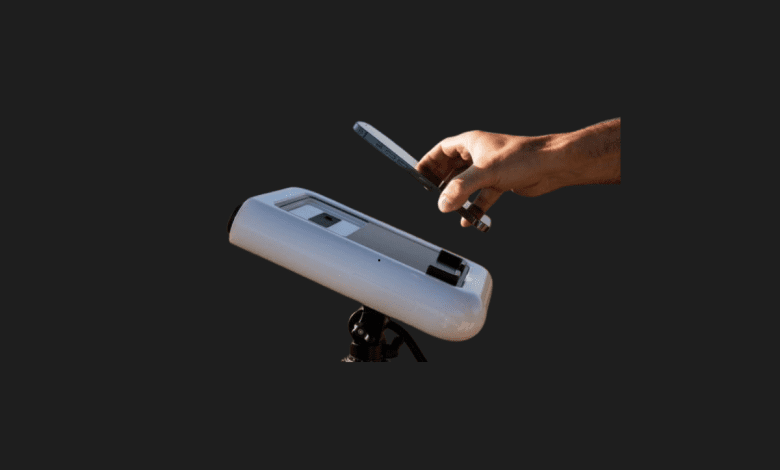
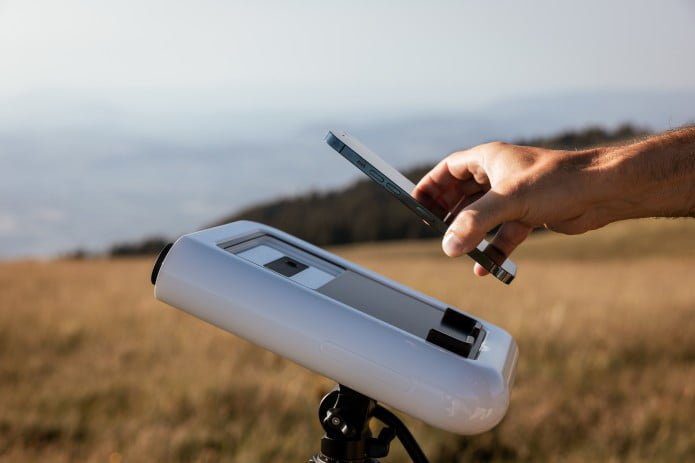
The premise of the Vaonis Hestia is wonderfully modern—it uses our daily digital extensions to peer out into the cosmos. When you unbox it, you realize it is essentially a highly engineered block of premium optics. There are no batteries to charge, no complex motorized equatorial mounts to calibrate, and no fragile electronic boards to worry about. It relies entirely on the processing power, software algorithms, and camera sensor of your iPhone or Android device. You simply place your phone onto the adjustable magnetic platform, align your primary camera lens with Hestia’s ocular using their dedicated app, and point the entire rig at the sky.
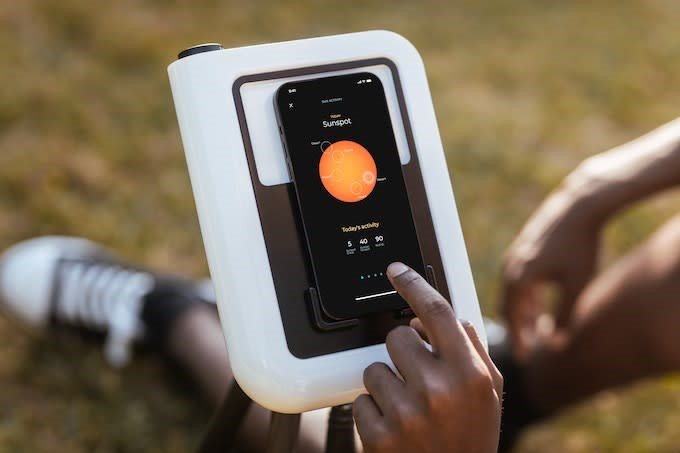
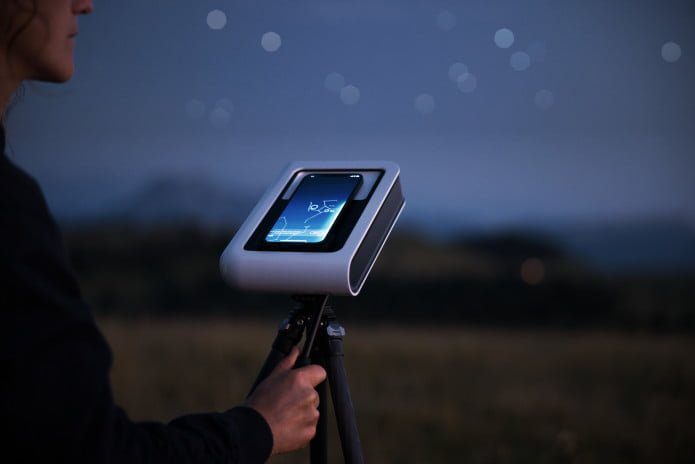
My first night out with it, I naturally aimed for the moon. The companion app, Gravity, is genuinely one of the best pieces of astronomy software I have ever used. It acts as an interactive sky map, guiding you exactly where to point the device with intuitive on-screen arrows. Once aligned, the app takes over your phone’s camera settings, automatically adjusting the exposure, ISO, and focus to capture the lunar surface. The result? A stunning, crisp image of the moon’s craters that I immediately shared across my social feeds. It completely bypassed the usual frustration of trying to hold a phone camera steady over a standard telescope eyepiece.
However, we have to ground our expectations in physical reality. Hestia is an optical attachment, not the James Webb Space Telescope. Because it relies heavily on your smartphone, your experience will vary wildly depending on the hardware you own. I tested this with a top-tier modern flagship phone, and the results were highly impressive for lunar and solar photography. But when aiming at deep-sky objects, the limitations of a smartphone sensor become apparent, even with the app’s clever image-stacking algorithms. Furthermore, the physical alignment of your phone’s lens with the Hestia’s optics requires patience. If you bump the phone while tapping the screen in the dark, you have to realign it all over again.
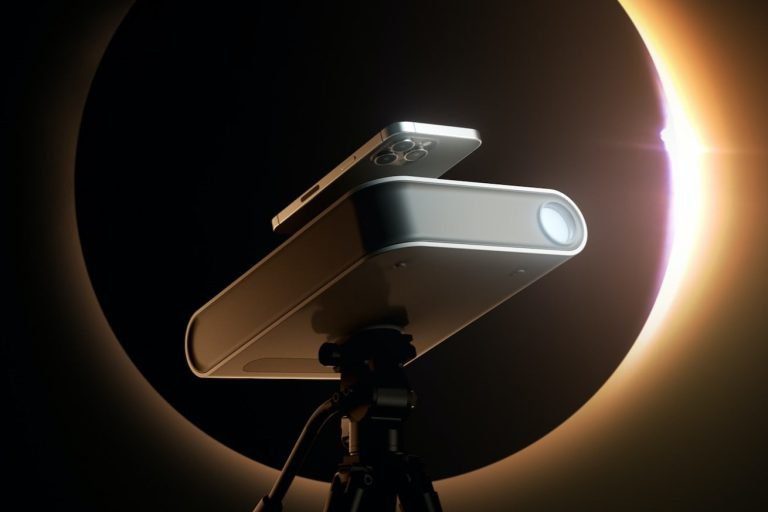
Despite these minor quirks, at under $200, it is an absolute triumph of accessible science. It removes the intimidating barrier to entry that keeps so many people from looking up at the stars. Whether you are tracking sunspots during a lazy Sunday afternoon (using the essential, included solar filter) or capturing a lunar eclipse, it makes the cosmos shareable in an instant. For anyone who dreams of space but lacks the room or the budget for an observatory-grade setup, having a telescope that fits in a backpack alongside your laptop is an absolute game-changer.
Who is this for?
The Hestia is perfect for beginners, science enthusiasts, and parents wanting to introduce their kids to astronomy without breaking the bank or dealing with complex telescope setups. It is the ultimate “grab-and-go” device for casual stargazing and solar viewing.
Alternatives to consider:
If you have a significantly higher budget and want a fully motorized, automated smart telescope that does all the tracking for you, the Vaonis Vespera is the premium step up. If you prefer a traditional optical viewing experience but still want smartphone guidance, the Celestron StarSense Explorer line uses your phone to navigate but relies on classic lenses and eyepieces for viewing.
Can I use it to look at the Sun safely?
Yes, but only with the proper filter. The Hestia comes with a dedicated solar filter that fits securely over the objective lens. You must ensure this is attached before pointing it at the sun to protect both your eyes and your smartphone’s camera sensor.
Will I be able to see the rings of Saturn?
No. The Hestia is designed primarily for capturing the Moon, the Sun, and brighter deep-sky objects (like star clusters). Planets like Jupiter and Saturn will appear as bright dots, but it lacks the heavy optical magnification required to resolve fine planetary details like rings or atmospheric bands.
Vaonis Hestia Review
Product Images
You Might Also Like;